
Beds of eel grass make for prime speckled trout fishing in Lake Pontchartrain. But how do you know where they are? Here's a few tips.
Fall fishing in Lake Pontchartrain can be really good, and while most people tend to think of the bridges when they think of the lake's legendary fishing, the various grass beds are another hot item as well.
Why are Lake Pontchartrain's grass beds so good?
When speckled trout are spawning during the summer they do so "outside" of the marsh where there's saltier water.
This is why we don't really find a lot of speckled trout in Lake Pontchartrain during the summer months, because her salinity is too low.
Maps like the one produced by Hydrocoast show just how salty she is (or isn't).
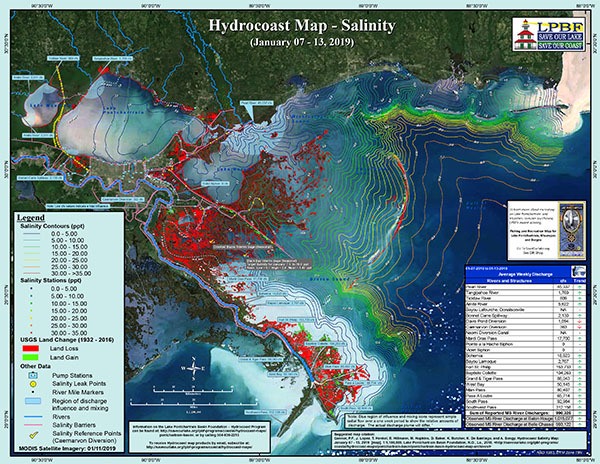
But, once the spawn is over, salinity is no longer a requirement and speckled trout head "inside" the marsh to feed in preparation for winter.
Once they do, you can expect them to populate bait-laden hot spots, with grass beds being one of them.
How good can fishing the grass beds be?
Pretty darned good! See for yourself in this video:
But not just any grass...
There are many types of aquatic grass we find throughout Louisiana's coast, with the more common type being milfoil and widgeon grass.
These types of grass tend to choke out the entire water column like what you see in redfish ponds, but not eel grass.
Eel grass, also called turtle grass or shoal grass, does not grow to the water's surface, leaving plenty of real estate for speckled trout to prowl looking for bait like mullet, mehaden (aka "pogies) and – an absolute favorite – shrimp!
How can we find beds of eel grass in Lake Pontchartrain?
There are more ways than one: First, there's experience, meaning you must get out there and look in the water for yourself.
While this works, it's time consuming and not nearly as effective as other methods.
That and it's difficult to see underwater, even with polarized lenses and good light conditions.
Google Earth Pro is an option, as its historical satellite imagery can you show you where grass beds (of any type) are most likely to be found in the marsh.
Sonar Is An Excellent Tool
Google Earth Pro can get you close, but sonar will zero you in.
After all, any imagery you find on the Internet is old news.
But, if you use sonar while you are fishing you can see exactly where the grass beds are located, revealing where you need to be casting to catch a decent box of speckled trout.
Conventional 2D sonar works to this end, but it's not the best because it only covers a narrow cone directly under your boat.
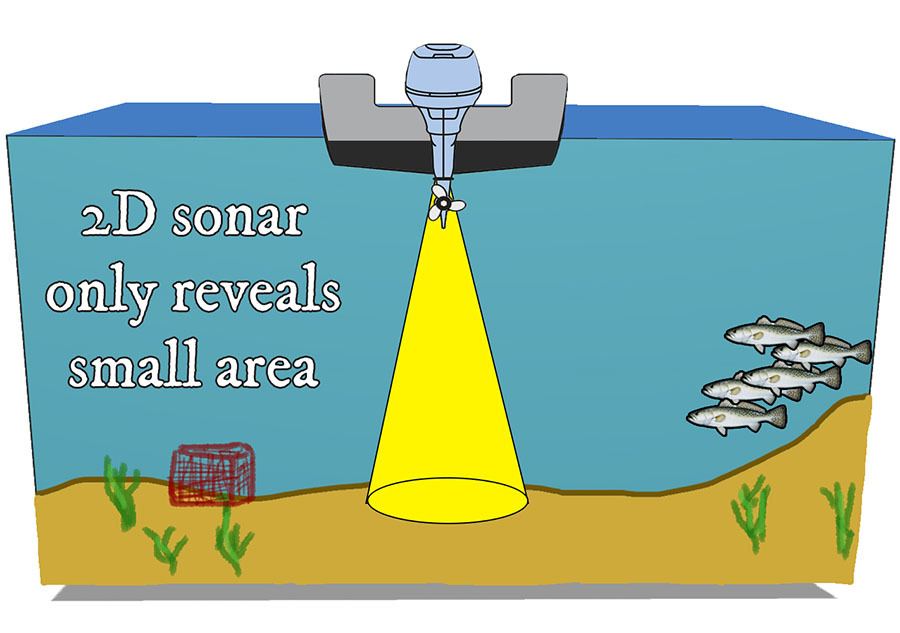
But, side imaging sonar reveals much more, since it spreads over a wider fan.
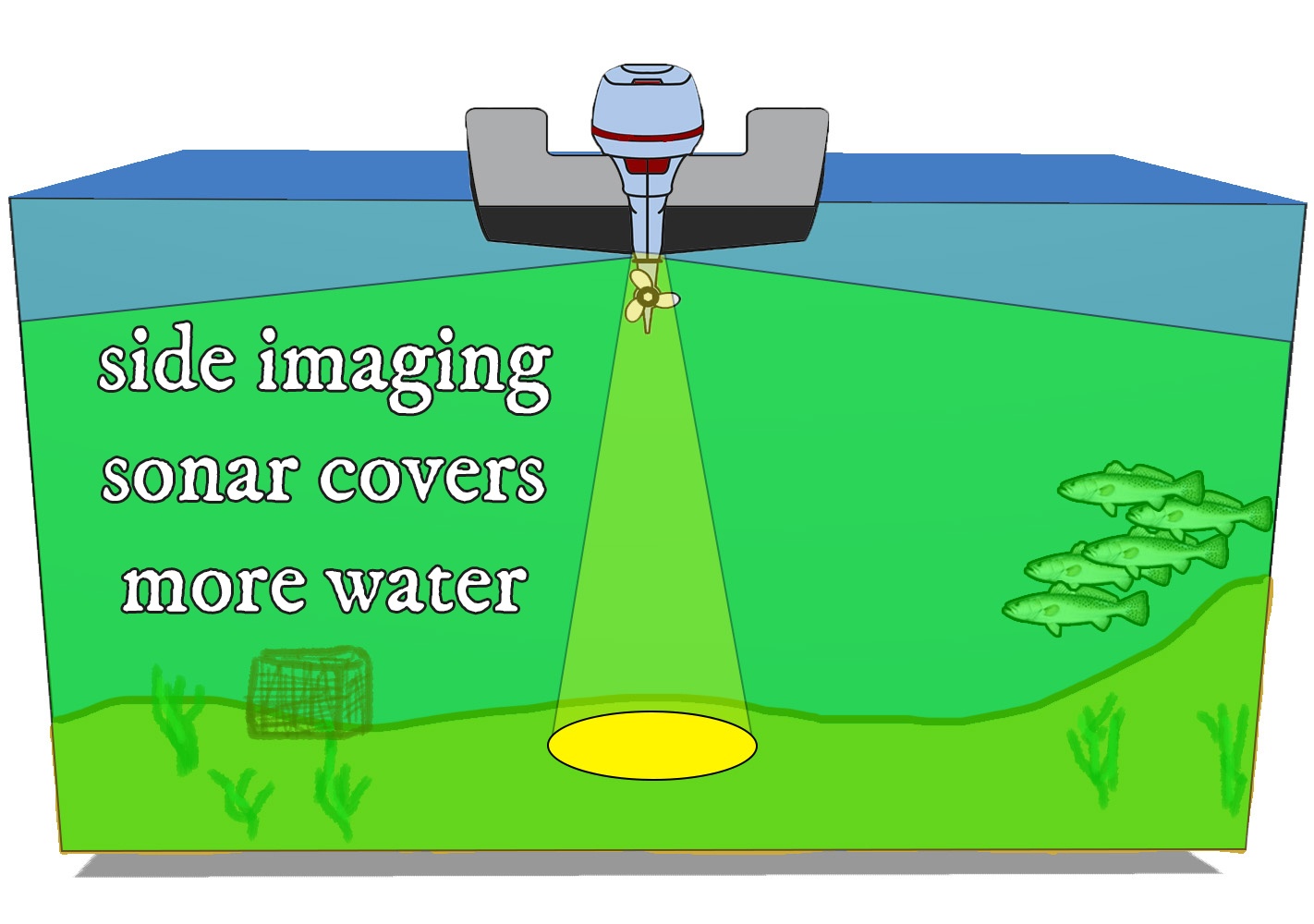
How wide of a fan?
On my Helix 12 I can easily punch out to beyond one hundred feet!
However, side imaging 40-70 feet off each side of the boat is a more practical setting.
Get More Fishing Tips & Know Where To Go
Inside my membership LAFB Elite, inshore anglers learn the process I use to find and catch fish from scratch. You'll find this time-tested practical know-how in the video lessons of Inshore Fishing 101, Fall Fish Location and more.
Additionally, members LAFB Elite get access to the Community, where they can read the latest fishing reports and get feedback on their fishing trips from like-minded anglers.
No More Frustration
I too was frustrated with the many times I went and fished all day only to come home with little to nothing.
I have been an Elite member now for a couple of months, and while I haven't loaded the boat yet, I can say that I have learned a lot.
Some of the stuff that Devin teaches, I think that I already was doing but not understanding why. Plus I learned the things that "I didn't know that I did not know".
I am very pleased with LAFB Elite, and recommend it to anyone who's on the fence considering if they should join or not.
Like Devin says: it costs less that a bucket of live shrimp, so what do you have to lose?
Dannie Spivey
South Carolina Angler
Inshore Fishing 101 transformed my fishing trips!
I grew up fishing Delacroix with my dad from age 8-14. I never understood what we were doing or why, and didn’t think to ask questions. Dad did all the leg work and put us on the fish, I just threw at 'em and reeled 'em in.
Today, Captain Devin's Inshore Fishing 101 helped me learn all the things my dad knew to make those fishing trips happen. I'm able to plan good fishing trips to find 'em and catch 'em.
This is much easier due to Devin's ability to "dumb things down" and make fishing concepts easily understandable.
Now 18 years later we are getting a new boat and getting back on the water. Looking forward to showing Dad what I have learned!
Jeffrey Stewart
Mississippi Angler
I learned a lot, definitely not clueless like before!
Before taking Inshore Fishing 101, I literally knew nothing about fishing the marsh, much less saltwater.
I grew up fishing freshwater lakes in Maryland and then came to Tulane for college. It's been nearly 12 years since I dipped a rod in the water with an idea of what I was trying to do.
Devin's courses fixed all that. Now I have a plan, I know what to do and I have been getting results!

Yes captain I agree sonar is very important to me I have a Garmin and it helps me a lot to zero in on some awesome spots once I learned how to use it